Falkland Islands History The Sovereignty Dispute Between Britain and Argentina

Few places show the weight of history as clearly as the Falkland Islands. This small, windswept archipelago in the South Atlantic has been at the centre of a sovereignty dispute for centuries, involving European exploration, colonial rivalry, Argentine independence, British administration, war, diplomacy, and the wishes of the islanders themselves.
Known in Argentina as the Islas Malvinas, the islands sit about 480 kilometres east of Patagonia. They were uninhabited before Europeans arrived, which makes the dispute different from many other territorial conflicts. There was no Indigenous population whose sovereignty was displaced. Instead, the argument rests on competing claims of discovery, settlement, inheritance, occupation, and self-determination.
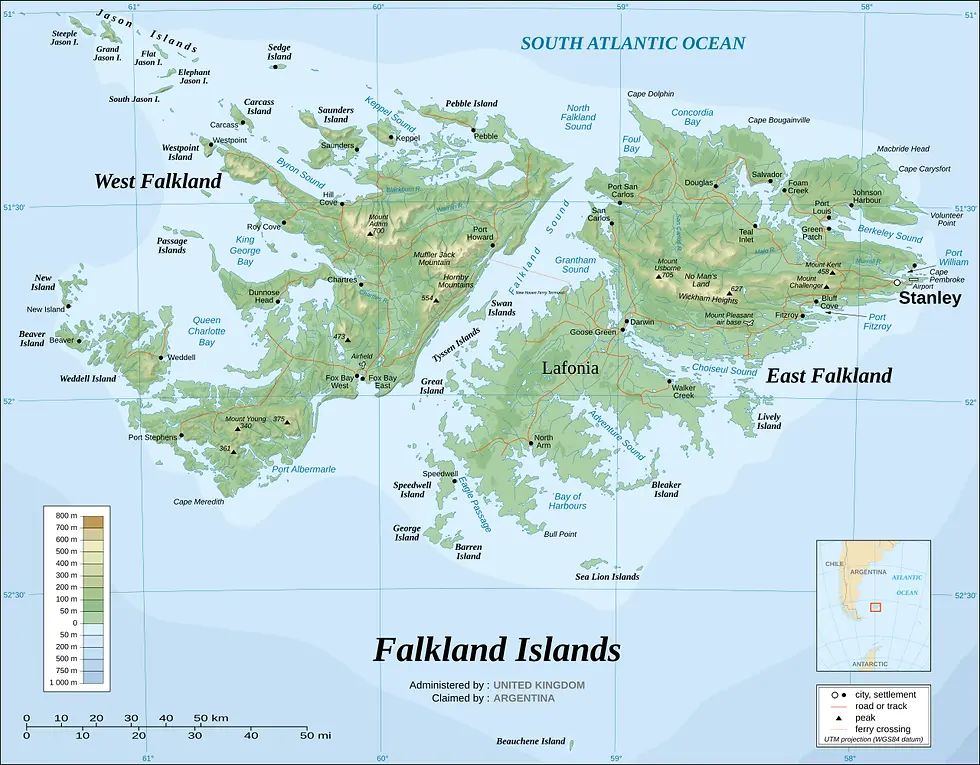
The islands were uninhabited before European arrival
Before European sailors found and named the islands, the Falklands had no permanent human population. That fact matters because both the British and Argentine positions later developed from European colonial activity rather than from earlier local rule.
The early history remains tangled. Several European navigators may have sighted the islands before the first recorded landing, but the widely cited British claim begins in 1690, when English captain John Strong sailed through the channel between the two main islands. He named it Falkland Sound after Viscount Falkland.
At this stage, a sighting or landing did not create a modern state in the way we would understand it today. European empires often treated discovery, naming, occupation, and settlement as different steps towards a claim. Rival powers could, and often did, claim the same remote territories.
Britain, France, and Spain all entered the story
The 18th century brought the first serious attempts to occupy the islands.
France established a settlement at Port Louis on East Falkland in the 1760s. The French name, Îles Malouines, came from Saint-Malo, the home port of some of the sailors involved. This name later influenced the Spanish name, Islas Malvinas.
Spain objected to the French presence because it considered the region part of its wider South Atlantic and South American sphere. France eventually transferred its settlement to Spain. Spain then maintained a presence from the former French site.
Britain also acted. In 1765, the British established a settlement at Port Egmont on West Falkland. This created a direct clash between British and Spanish claims.
In 1770, Spain expelled the British from Port Egmont, almost triggering war between Britain and Spain. The crisis eased when Britain returned, but the dispute did not end. Britain later withdrew its garrison in 1774, largely for economic reasons, yet it left signs of possession and continued to claim sovereignty.
Spain maintained its own settlement for several more decades. By 1811, as the Peninsular War weakened Spain and independence movements spread across South America, Spain abandoned its garrison. The islands were left without a stable state presence.
British position | Argentine position |
Britain points to early landing, settlement at Port Egmont, continued legal claim after withdrawal, and later continuous administration. | Argentina argues it inherited Spain’s rights after independence and that Britain removed Argentine authority in 1833. |
Britain places strong weight on the wishes of the current islanders. | Argentina argues the dispute is a case of colonial dispossession and territorial integrity. |
Argentina’s claim grew from Spanish colonial inheritance
Argentina declared independence from Spain in 1816. Its claim to the Falklands rests heavily on the doctrine known as `uti possidetis juris`, a principle used in Latin America to argue that new states inherited the administrative territories of the former Spanish empire.
From Argentina’s perspective, Spain held the islands before independence. Argentina therefore argues that the islands passed to the new Argentine state, just as other former Spanish territories did.
Buenos Aires began trying to assert authority in the 1820s. In 1829, it appointed Luis Vernet as governor or commander of the islands. Vernet tried to regulate settlement, fishing, and sealing around the islands. Britain formally protested this appointment, making clear that it still claimed sovereignty.
The situation became more unstable after a dispute involving United States vessels and fishing rights. In 1831, the US warship USS Lexington attacked the settlement at Puerto Luis after American sealing ships were seized. This weakened the Argentine presence and added another layer of disorder.
Britain reasserted control in 1833
In January 1833, the Royal Navy arrived and reasserted British control. The British removed the Argentine military detachment. The action took place without bloodshed, and the civilian population was invited to remain.
For Britain, 1833 marked the restoration of an existing claim. For Argentina, it marked the unlawful removal of its authority from territory it had inherited from Spain and begun to administer.
This is the central historical break in the dispute. The two sides do not simply disagree about one event. They interpret the whole chain of events differently.
Britain stresses that it never gave up its claim after leaving Port Egmont in 1774. It also points to long, continuous administration from 1833 onwards.
Argentina stresses that Britain used force against a newly independent Latin American state and then settled the islands under British rule. Argentine governments have protested the British presence ever since.
British settlement shaped the islands after 1833
After 1833, Britain built a permanent colonial administration. Over time, the islands developed institutions, farms, ports, and a distinct local community. Sheep farming became central to the economy, and Stanley grew as the main settlement and administrative centre.
The islanders developed strong cultural, political, and family links with Britain. English became the everyday language. British law and institutions shaped public life. The islands also gained strategic value, especially because of their position near Cape Horn before the Panama Canal changed global shipping routes.
This long period of British administration is one reason the modern UK position places so much emphasis on self-determination. Britain argues that the people who live on the islands have the right to decide their own political future.
Argentina rejects that framing. It argues that the islanders are a transplanted population that resulted from British occupation, so their wishes cannot override Argentina’s territorial claim. This difference sits at the heart of failed negotiations.
The dispute entered the United Nations era
After the Second World War, international law and global politics changed. The United Nations placed greater focus on decolonisation, and the Falkland Islands became part of the UN discussion about non-self-governing territories.
In 1965, the UN General Assembly passed Resolution 2065, which recognised that a sovereignty dispute existed between Britain and Argentina and called on both governments to negotiate. This was a major diplomatic moment because it gave Argentina a platform in international forums.
Talks followed at different points, but they made little progress. Britain faced pressure to discuss sovereignty. At the same time, it had to consider the wishes of the islanders, who strongly opposed Argentine rule.
Argentina saw the issue as unfinished decolonisation. Britain saw it as a matter that could not be settled against the wishes of the people living there.
By the late 20th century, both sides had firm public positions. Compromise became politically difficult, especially in Argentina, where the Malvinas claim formed part of national identity and appeared in education, maps, and public memory.
The Falklands War changed everything
The dispute turned into war on 2 April 1982, when Argentine forces invaded and occupied the islands. Argentina was then ruled by a military junta facing economic trouble and public unrest. The invasion was popular in Argentina at first, as many people viewed the islands as rightfully Argentine.
Britain, led by Prime Minister Margaret Thatcher, sent a naval task force to retake the islands. The campaign was fought over long distances and in harsh conditions. Battles took place at sea, in the air, and on land. British forces recaptured the islands after Argentine troops surrendered on 14 June 1982.
The war lasted just over ten weeks, but its effects were lasting and painful. Hundreds of service personnel died, most of them Argentine. The sinking of the Argentine cruiser General Belgrano and the loss of British ships such as HMS Sheffield became defining moments of the conflict.
For Argentina, the defeat helped discredit the military junta and contributed to the return of democracy. For Britain, the victory strengthened the government and reinforced the commitment to defend the islanders’ wishes.
For the islanders, the war was not an abstract diplomatic event. It brought occupation, fear, destruction, landmines, and lasting security concerns. It also made any transfer of sovereignty to Argentina far less likely in British politics.
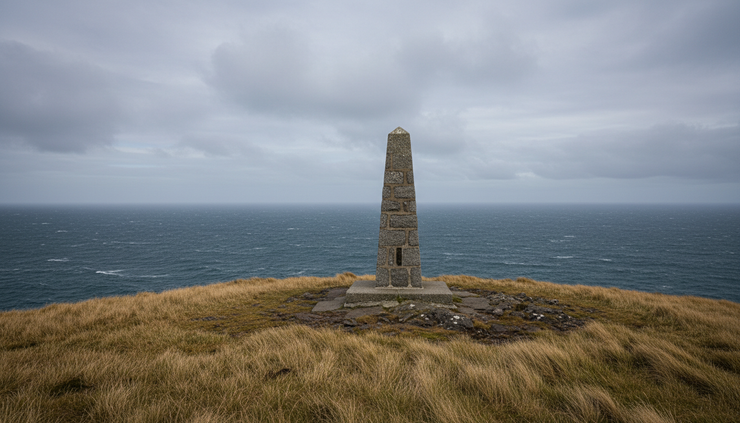
Self-determination became central after the war
After 1982, Britain increased its military presence and invested more in the islands. The Falkland Islanders gained a stronger political voice, and their identity became more visible internationally.
In 2013, the Falkland Islands held a referendum on their political status. The result was overwhelmingly in favour of remaining a British Overseas Territory. Britain points to this vote as clear evidence of self-determination.
Argentina dismissed the referendum. Its position is that the islanders do not form a separate people with the right to decide sovereignty over the territory. Argentina continues to call for bilateral negotiations with Britain, as encouraged by UN resolutions.
This creates a deadlock.
Britain says there can be no sovereignty talks unless the islanders want them. Argentina says Britain cannot use the islanders’ views to avoid discussing what Argentina sees as a colonial territorial dispute.
Why both sides still care about the islands
The dispute is not only about history. Several modern factors keep it alive.
National identity matters deeply. In Argentina, the Malvinas claim is woven into national consciousness. The phrase “Las Malvinas son argentinas” remains a powerful political and cultural statement.
Self-government matters to the islanders. They have their own elected government for domestic affairs and strongly identify with their current status.
Strategic location still matters. The islands sit in the South Atlantic, near routes to Antarctica and the Southern Ocean.
Resources also play a role. Fisheries are important to the Falklands economy, and offshore oil exploration has drawn attention at times. Resource questions can make sovereignty disputes more sensitive, even when they are not the only cause.
International law matters too, but it does not provide a simple answer accepted by all sides. The dispute brings together competing principles: territorial integrity, decolonisation, historical title, effective administration, and self-determination.
The names themselves carry political meaning
Even the names used for the islands can signal political position.
In Britain and on the islands, “Falkland Islands” is standard. In Argentina and much of Spanish-speaking Latin America, “Islas Malvinas” is standard. Some neutral accounts use both names at first mention.
The same applies to place names. Stanley is often called Puerto Argentino in Argentina. These choices reflect memory, identity, and sovereignty claims. They are not just labels on a map.
Careful writing on the subject often recognises both naming traditions while staying clear about the political context.

Where the dispute stands today
Today, the Falkland Islands remain a British Overseas Territory. They have internal self-government, while the United Kingdom handles defence and foreign affairs. Argentina continues to claim sovereignty and raises the issue in international forums.
Diplomatic relations between the UK and Argentina have varied over time. The two countries have cooperated on some practical matters, but sovereignty remains unresolved. The core positions have not changed.
The UK says it will respect the islanders’ right to choose their future. Argentina says the UK must negotiate sovereignty and end what it regards as an occupation.
That is why the dispute has lasted so long. It is not only a question of who arrived first, or who controlled the islands at one moment in the 18th or 19th century. It is a dispute where different legal and moral principles point in different directions, depending on which history is given the most weight.
The Falklands, or Malvinas, remain a small place with a large historical shadow. Their story shows how colonial-era claims can outlive empires, how identity can keep a territorial dispute alive, and how the principle of self-determination can clash with the principle of inherited sovereignty. Any lasting settlement would have to address all three: history, law, and the people who call the islands home.


Comments